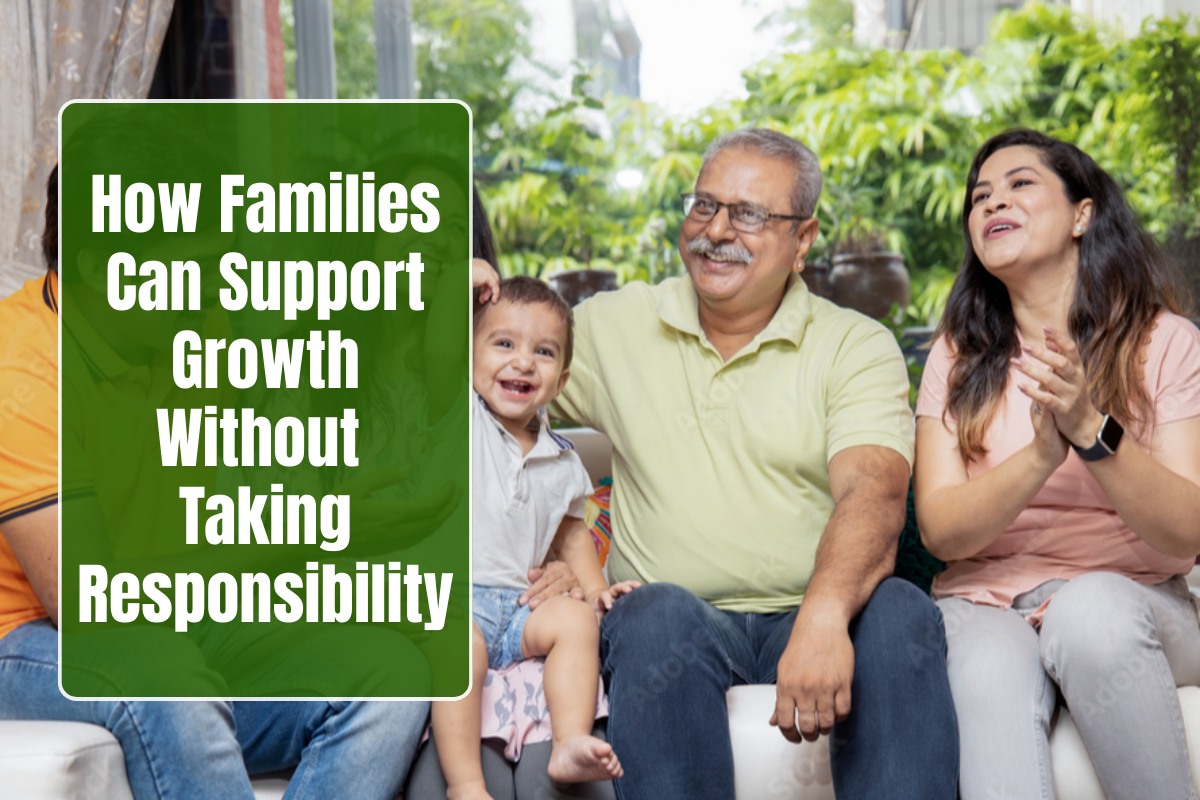
Families often want to help loved ones grow, heal, or move forward—especially during times of transition, stress, or uncertainty. This desire comes from care and concern, but it can unintentionally slide into over-responsibility. When families take on responsibility that belongs to someone else, growth can stall rather than accelerate. Sustainable growth happens when support empowers autonomy instead of replacing it.
Understanding the Difference Between Support and Responsibility
Support and responsibility are not the same. Support involves encouragement, resources, and presence. Responsibility involves ownership, decision-making, and accountability. When families blur this line, they may begin solving problems, making decisions, or carrying emotional burdens that are not theirs to hold.
Growth requires individuals to experience agency—the sense that their choices matter and their actions shape outcomes. When families assume responsibility, even with good intentions, they can unintentionally signal that the person is not capable of managing their own life.
Creating Space for Ownership and Decision-Making
One of the most powerful ways families can support growth is by stepping back from decision-making. This does not mean withdrawing care or becoming indifferent. It means allowing the individual to choose their path, even when those choices involve uncertainty or discomfort.
Asking open-ended questions such as “What do you think your next step should be?” or “What support would be helpful right now?” reinforces ownership. Growth accelerates when people feel trusted to think, decide, and act for themselves.
Offering Emotional Support Without Emotional Carrying
Emotional support does not require absorbing someone else’s emotions. Families can listen, validate feelings, and express care without trying to fix, soothe, or carry emotional pain on someone else’s behalf.
Phrases like “That sounds really hard” or “I can see why you feel that way” acknowledge emotion without taking responsibility for resolving it. This approach respects the individual’s emotional process while preventing family members from becoming overwhelmed or entangled.
Setting Healthy Boundaries That Enable Growth
Boundaries are essential for growth on both sides. They clarify what families can offer and what remains the individual’s responsibility. Clear boundaries reduce resentment, burnout, and confusion.
Healthy boundaries might include limits on financial support, emotional availability, or problem-solving involvement. When boundaries are communicated calmly and consistently, they create a stable environment in which growth can occur without dependency.
Supporting Skills, Not Outcomes
Families often focus on outcomes—success, stability, happiness—rather than the skills required to reach them. Growth is more sustainable when families support skill-building instead of guaranteeing results.
This might involve encouraging problem-solving, planning, emotional regulation, or help-seeking skills. When families focus on skills, individuals learn how to navigate challenges independently rather than relying on external rescue.
Allowing Natural Consequences Without Withdrawal
One of the hardest aspects of supportive detachment is allowing natural consequences. Growth often comes from experiencing the results of one’s choices. Families can allow consequences without withdrawing care or becoming punitive.
This balance looks like remaining emotionally present while not intervening to prevent every difficulty. It communicates confidence in the individual’s capacity to learn and adapt.
Avoiding the Trap of Over-Helping
Over-helping often stems from anxiety, fear, or love—but it can undermine confidence. When families rush to fix problems, offer unsolicited advice, or step in too quickly, they reduce opportunities for growth.
Pausing before helping and asking “Is this something they can handle themselves?” helps recalibrate support. Sometimes the most supportive act is restraint.
Modeling Healthy Growth and Self-Responsibility
Families teach growth not only through what they do for others, but through how they live their own lives. Modeling self-responsibility, boundary-setting, emotional regulation, and help-seeking provides a powerful, unspoken lesson.
When individuals see family members respecting their own limits and taking ownership of their own growth, it reinforces the same capacity in others.
Trusting the Growth Process
Growth is rarely linear. Setbacks, uncertainty, and discomfort are part of the process. Families can best support growth by trusting that struggle does not mean failure and that autonomy develops through experience.
Trust communicates belief—and belief is one of the strongest foundations for sustainable growth.
FAQs
What does supporting growth without responsibility mean?
It means offering encouragement, presence, and resources without taking ownership of someone else’s decisions or outcomes.
Is stepping back the same as being unsupportive?
No. Stepping back from responsibility can coexist with strong emotional support and care.
Why does over-helping slow growth?
Because it reduces opportunities for decision-making, learning, and confidence-building.
How can families set boundaries without guilt?
By recognizing that boundaries protect both parties and support long-term growth rather than short-term comfort.
What if someone makes poor choices when given autonomy?
Mistakes are part of growth. Families can remain supportive while allowing learning to occur through experience.