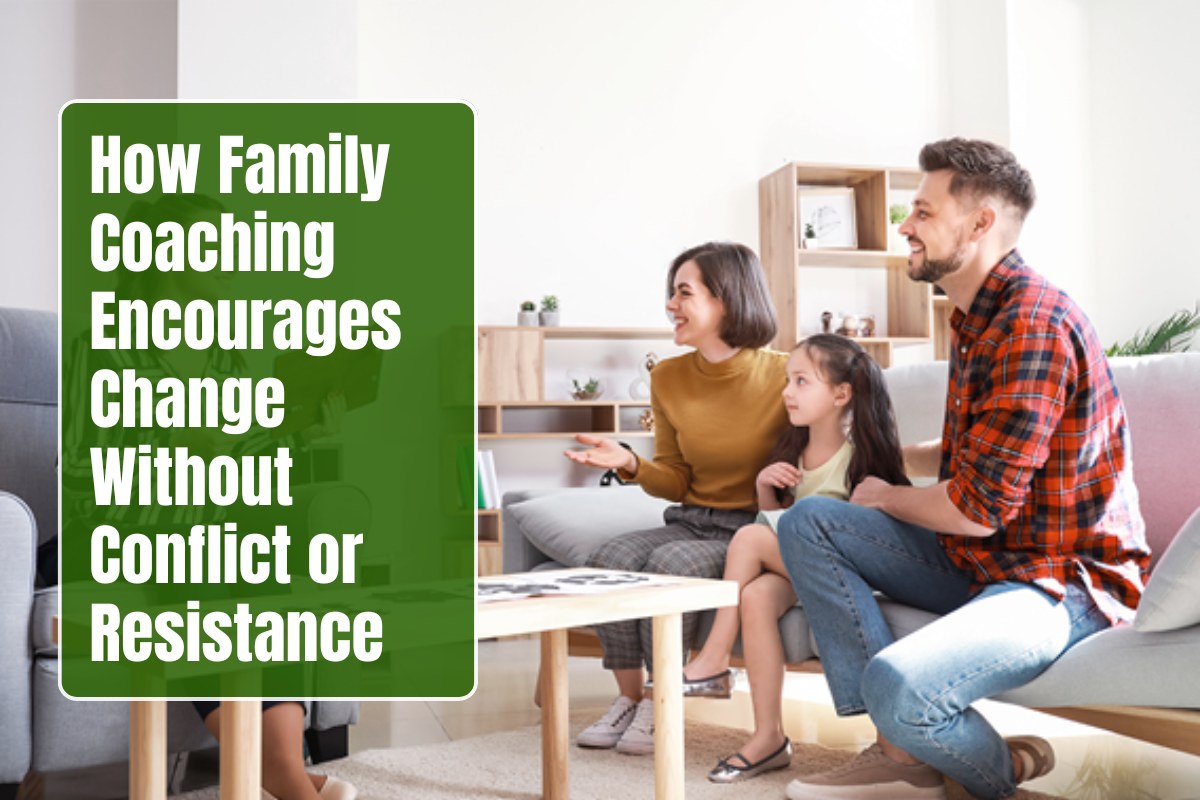
Change within a family is rarely simple. Even when everyone wants things to improve, attempts to address problems can easily lead to defensiveness, arguments, or emotional withdrawal. Family coaching offers a different path—one that encourages meaningful change without conflict or resistance by focusing on understanding, collaboration, and practical skill-building rather than blame or control.
This approach helps families move forward together by creating conditions where change feels safe, supported, and self-directed.
Shifting From “Fixing” to Understanding
One of the main reasons change efforts create resistance is that family members often feel judged or blamed. Family coaching shifts the focus away from “fixing” a person and toward understanding patterns, needs, and perspectives.
Instead of asking “Who is the problem?” coaching asks:
- What is happening beneath the surface?
- What unmet needs are influencing behavior?
- How do family interactions unintentionally maintain the issue?
When people feel understood rather than corrected, defensiveness naturally decreases, making openness to change more likely.
Creating Psychological Safety
Change requires vulnerability, and vulnerability is impossible without psychological safety. Family coaching prioritizes creating an environment where each person feels emotionally safe to speak honestly without fear of criticism, punishment, or dismissal.
Coaches help families establish ground rules such as respectful listening, non-judgmental language, and equal voice. This safety allows difficult topics to be explored calmly, reducing emotional escalation and power struggles.
When safety increases, resistance decreases.
Empowering Choice Instead of Forcing Compliance
Resistance often arises when people feel controlled or pressured. Family coaching encourages change by emphasizing choice and autonomy rather than authority or ultimatums.
Rather than telling a family member what they must do, coaching helps them:
- Clarify what they want to change and why
- Explore options and consequences
- Decide on steps that feel realistic and meaningful to them
When change is chosen rather than imposed, it feels empowering instead of threatening.
Focusing on Patterns, Not Personalities
Conflict often intensifies when issues are framed as personal flaws. Family coaching reframes problems as interaction patterns rather than character defects.
For example, instead of labeling someone as “uncooperative” or “emotionally distant,” coaching explores how stress, communication habits, or unspoken expectations contribute to recurring cycles.
This shift reduces shame and blame, allowing family members to work together against the pattern rather than against each other.
Improving Communication Without Confrontation
Family coaching teaches practical communication skills that reduce misunderstandings and emotional reactivity. These include:
- Expressing needs without accusation
- Listening to understand rather than respond
- Validating emotions without necessarily agreeing
- Setting boundaries calmly and clearly
As communication improves, families experience fewer emotional blowups and less need for confrontation. Change happens through dialogue rather than debate.
Addressing Resistance With Curiosity, Not Pressure
In family coaching, resistance is not treated as defiance or stubbornness. It is viewed as valuable information. Resistance often signals fear, overwhelm, lack of readiness, or unmet needs.
Coaches help families approach resistance with curiosity by asking:
- What feels hard about this change?
- What might be lost if things change?
- What support is missing?
When resistance is respected rather than challenged, it often softens on its own.
Strengthening Motivation Through Shared Goals
Family coaching encourages families to identify shared values and goals rather than focusing solely on problems. When everyone can see how change benefits the whole family, motivation becomes collective instead of oppositional.
Shared goals might include:
- A calmer home environment
- Stronger emotional connection
- More mutual respect
- Reduced stress and conflict
Working toward common outcomes transforms change from a battle into a partnership.
Building Skills for Long-Term Change
Rather than offering quick fixes, family coaching equips families with skills they can continue using long after coaching ends. These skills support ongoing growth without recurring conflict.
Families learn how to:
- Navigate disagreements constructively
- Adapt to life transitions
- Address issues early before they escalate
- Support one another without overstepping
This skill-based approach reduces dependence on crisis-driven interventions.
Family coaching encourages change without conflict or resistance by replacing pressure with understanding, control with choice, and blame with collaboration. By creating emotional safety, improving communication, and empowering each family member’s autonomy, coaching helps change feel achievable rather than threatening.
When families feel heard, respected, and supported, change no longer requires force. It becomes a natural outcome of healthier relationships and shared commitment.
Frequently Asked Questions (FAQ)
How is family coaching different from family therapy?
Family coaching focuses on present challenges, goals, and skill-building rather than diagnosing or treating mental health conditions.
Can family coaching work if one person is resistant?
Yes. Coaching often helps uncover the reasons behind resistance and addresses them without pressure, which can gradually increase engagement.
Does family coaching avoid difficult conversations?
No. It supports difficult conversations in a structured, respectful way that reduces emotional escalation.
How long does family coaching take to see results?
Many families notice improvements in communication and tension within a few sessions, though lasting change develops over time.
Is family coaching only for families in crisis?
No. Family coaching is effective for preventing conflict, improving relationships, and navigating transitions—not just resolving crises.