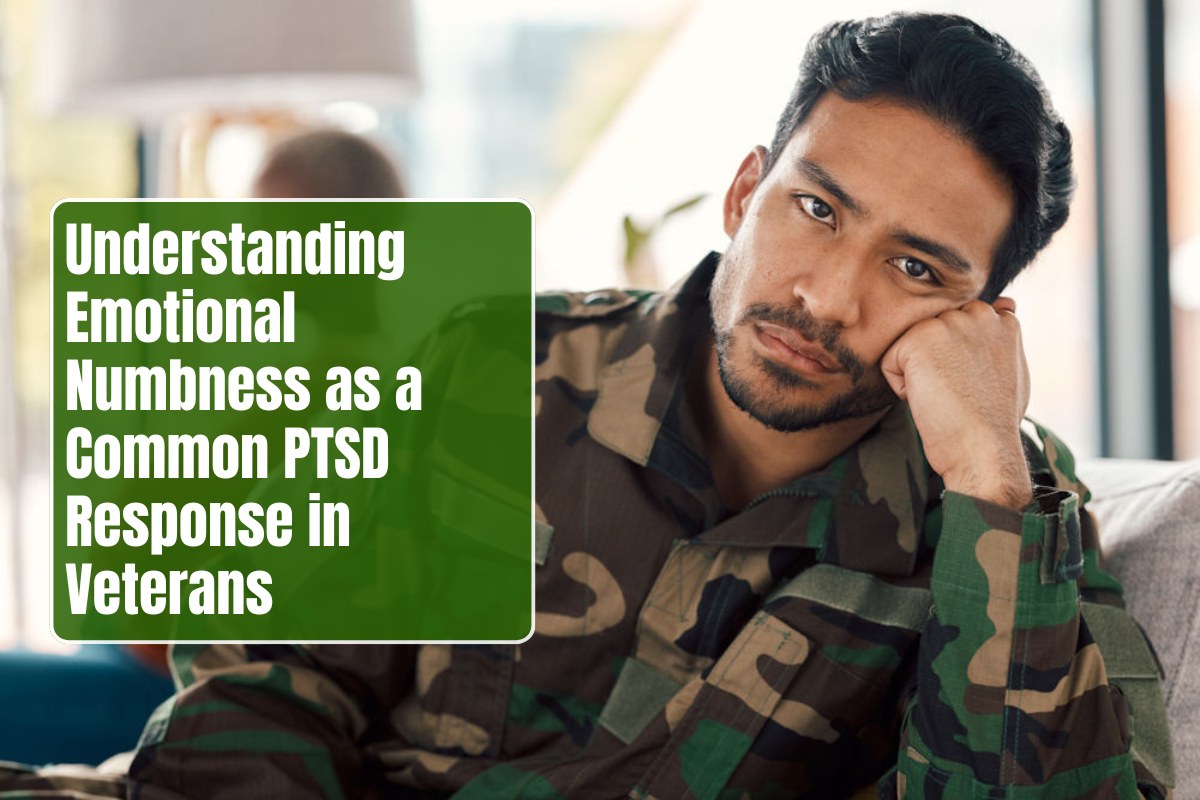
Emotional numbness is one of the most misunderstood and frequently overlooked symptoms of post-traumatic stress disorder (PTSD) in veterans. Unlike more visible reactions such as anger, anxiety, or flashbacks, emotional numbness is quiet and internal.
It can affect how veterans experience relationships, pleasure, and even their own sense of identity. Understanding emotional numbness as a common PTSD response is essential for supporting veterans and reducing the isolation many feel after military service.
What Is Emotional Numbness?
Emotional numbness refers to a reduced ability to feel or express emotions, both positive and negative. Veterans experiencing numbness may describe feeling “empty,” “detached,” or “shut down.” Joy, sadness, love, excitement, or grief may feel distant or muted, even in situations that would normally trigger strong emotions.
Rather than being a lack of caring, emotional numbness is often a protective response developed after exposure to traumatic or overwhelming experiences.
Why Emotional Numbness Develops in PTSD
During combat or high-risk military operations, intense emotions can interfere with survival. Fear, grief, and empathy may need to be suppressed to maintain focus and complete missions. Over time, the brain adapts by dampening emotional responses as a coping mechanism.
When trauma is repeated or prolonged, this emotional suppression can persist long after the danger has passed. In PTSD, the nervous system remains in a defensive state, limiting emotional engagement as a way to avoid psychological pain. Emotional numbness, therefore, is not a failure to feel—it is a learned survival strategy.
How Emotional Numbness Affects Veterans at Home
After returning to civilian life, emotional numbness can create significant challenges. Veterans may struggle to connect with spouses, children, or friends, even though they deeply value those relationships. They may feel disconnected during important life events or frustrated by their inability to experience happiness.
Loved ones sometimes misinterpret numbness as indifference or withdrawal, which can strain relationships. Veterans, in turn, may feel guilt or shame for not reacting “normally,” further reinforcing emotional distance.
Emotional Numbness vs. Depression
Although emotional numbness and depression often overlap, they are not the same. Depression typically involves persistent sadness, hopelessness, or low mood. Emotional numbness, on the other hand, is characterized by the absence or blunting of emotion altogether.
A veteran can experience numbness without feeling sad, or feel numb in some areas of life while still functioning effectively at work. Understanding this distinction is important for accurate diagnosis and appropriate treatment.
The Impact on Identity and Sense of Self
Emotions play a key role in how people understand themselves and the world around them. When emotions feel inaccessible, veterans may struggle with identity confusion or feel disconnected from who they were before trauma.
Many veterans report feeling like they are “going through the motions” of life rather than actively participating in it. This can reduce motivation, increase isolation, and contribute to a sense of meaninglessness if left unaddressed.
Why Veterans Often Don’t Talk About Emotional Numbness
Veterans may have difficulty recognizing emotional numbness as a symptom of PTSD. Because it does not always cause obvious distress, it can feel easier to ignore or accept as permanent.
Military culture also emphasizes emotional control and resilience, making it harder to articulate experiences related to emotional absence. Some veterans worry that discussing numbness will be misunderstood or dismissed, leading them to keep these experiences private.
Treatment and Recovery from Emotional Numbness
Emotional numbness is treatable, though recovery often takes time. Trauma-informed therapies such as cognitive processing therapy (CPT), prolonged exposure (PE), and EMDR are commonly used to help veterans safely process traumatic experiences and reconnect with emotions.
Support services provided through organizations such as the U.S. Department of Veterans Affairs also emphasize gradual emotional re-engagement, peer support, and skill-building to help veterans tolerate and express emotions again.
Recovery does not mean being overwhelmed by feelings; rather, it involves restoring balance and flexibility in emotional responses.
How Families Can Support Veterans Experiencing Numbness
Family members play an important role in recovery. Support is most effective when it is patient, nonjudgmental, and informed. Pressuring a veteran to “feel more” or “open up” can increase withdrawal, while consistent presence and understanding create emotional safety.
Learning about PTSD and emotional numbness helps families separate the symptom from the person, reducing blame and misunderstanding.
Frequently Asked Questions (FAQ)
Q. Is emotional numbness a normal PTSD symptom?
Yes. Emotional numbness is a common and well-documented response to trauma, particularly in veterans.
Q. Does emotional numbness mean a veteran doesn’t care?
No. Numbness affects emotional experience, not values or attachment. Veterans often care deeply but struggle to feel or express it.
Q. Can emotional numbness go away on its own?
In some cases it may lessen over time, but professional support greatly improves recovery and quality of life.
Q. Is emotional numbness permanent?
No. With appropriate treatment and support, many veterans regain emotional range and connection.
Q. What is the first step toward healing emotional numbness?
Recognizing it as a trauma response—not a personal failure—is often the most important first step.
Emotional numbness is a common, protective response to trauma that affects many veterans living with PTSD. While it can quietly disrupt relationships, identity, and daily life, it is neither permanent nor untreatable. With understanding, patience, and appropriate support, veterans can gradually reconnect with their emotions and rebuild a sense of engagement, meaning, and connection at home and beyond.