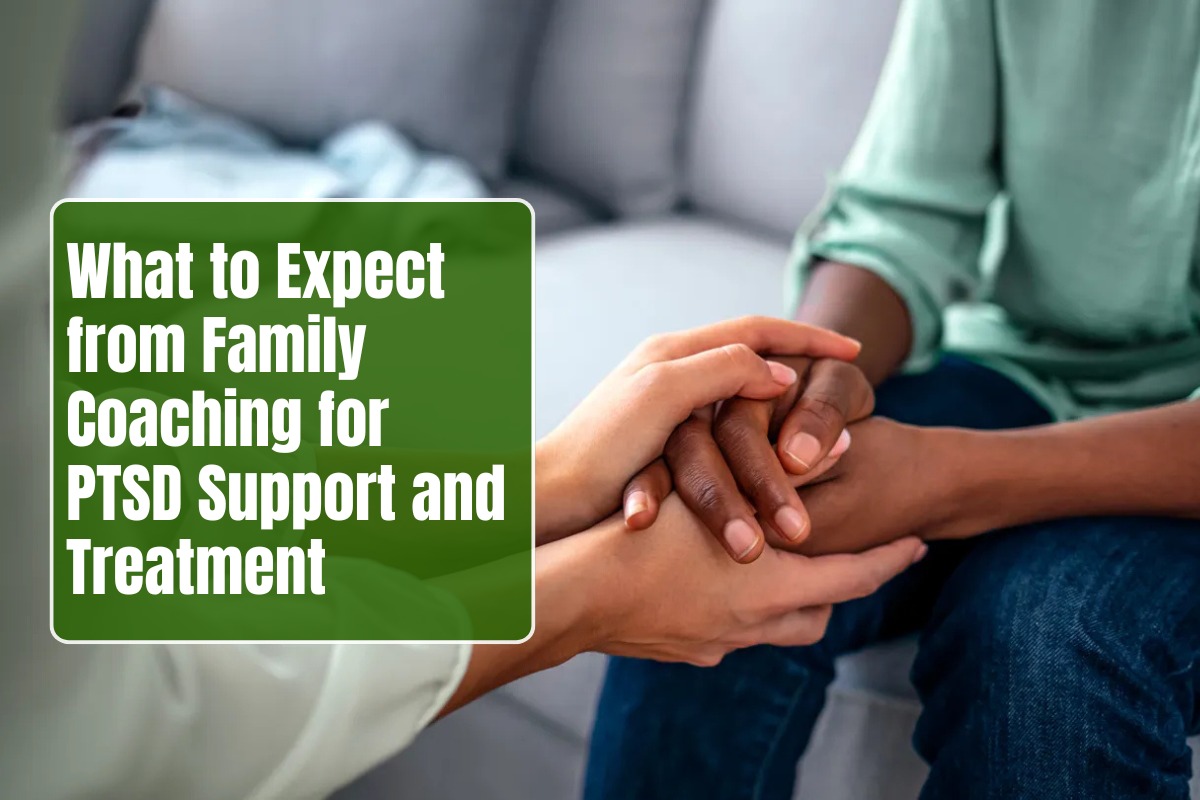
Post-traumatic stress disorder (PTSD) does not affect only the individual—it impacts the entire family system. Spouses, partners, parents, and children often experience confusion, emotional strain, and communication challenges as they try to support a loved one living with PTSD.
Family coaching has emerged as an effective, supportive approach that helps families understand PTSD, improve relationships, and contribute positively to recovery. Knowing what to expect from family coaching can reduce uncertainty and help families engage with confidence.
What Is Family Coaching for PTSD?
Family coaching for PTSD is a structured, supportive process designed to educate and empower family members. Unlike individual therapy, family coaching focuses on relationships, communication patterns, and shared coping strategies rather than diagnosing or treating mental illness directly.
Family coaches work alongside families to help them understand trauma responses, adjust expectations, and develop healthier ways of interacting. Coaching is collaborative and practical, emphasizing skills that can be applied in daily life rather than intensive emotional processing.
Education About PTSD and Trauma Responses
One of the first elements of family coaching is education. Families learn how PTSD affects the brain, nervous system, emotions, and behavior. Symptoms such as hypervigilance, emotional numbness, avoidance, irritability, and sleep disturbances are explained in clear, non-clinical terms.
This education helps family members reframe behaviors that may have previously felt personal or intentional. Understanding that symptoms are trauma responses—not character flaws—often reduces conflict, blame, and frustration within the household.
Improving Communication and Emotional Safety
PTSD can significantly disrupt communication. Veterans or trauma survivors may withdraw, become defensive, or struggle to express emotions, while family members may feel shut out or unheard.
Family coaching helps establish healthier communication patterns by teaching:
- Active listening skills
- Non-confrontational language
- How to express needs without triggering defensiveness
- How to recognize emotional overload
The goal is not to force conversations, but to create emotional safety so communication can happen more naturally and effectively.
Setting Healthy Boundaries and Expectations
A common challenge for families is finding the balance between support and self-care. Family coaching addresses boundary-setting in a constructive way, helping families avoid burnout, resentment, or over-accommodation.
Coaches guide families in setting realistic expectations for recovery, understanding limitations during symptom flare-ups, and defining roles that support healing without enabling avoidance. Healthy boundaries protect both the individual with PTSD and their loved ones.
Supporting Treatment Without Becoming the Therapist
Family members often feel pressure to “fix” the situation or take on the role of therapist. Family coaching helps relieve this burden by clarifying what supportive involvement looks like—and what it does not.
Families learn how to:
- Encourage professional treatment without coercion
- Respond to symptoms without escalating conflict
- Support coping strategies recommended by clinicians
- Recognize when to step back
This approach allows families to remain supportive partners rather than emotional caretakers.
Addressing the Emotional Impact on Family Members
Living with PTSD affects everyone in the household. Family coaching creates space to acknowledge the emotional toll on spouses, partners, and children without placing blame on the individual with PTSD.
Family members may explore feelings such as grief, anger, exhaustion, guilt, or loneliness. Validating these emotions helps reduce isolation and strengthens family resilience, which is essential for long-term stability.
Collaboration with Clinical Treatment
Family coaching often complements individual trauma therapy rather than replacing it. Coaches may help families align with treatment goals, understand therapy processes, and reinforce progress at home.
For veterans, family coaching may align with services offered through organizations such as the U.S. Department of Veterans Affairs or community-based mental health providers. This coordination ensures consistency and reduces confusion across support systems.
Focus on Long-Term Resilience, Not Quick Fixes
PTSD recovery is rarely linear. Family coaching emphasizes long-term resilience rather than immediate symptom elimination. Families are encouraged to view progress in terms of improved understanding, communication, and adaptability rather than the absence of symptoms.
This perspective helps families remain patient and hopeful during setbacks while continuing to build stronger relational foundations.
What Family Coaching Sessions Typically Look Like
While formats vary, most family coaching sessions include:
- Goal-setting based on family needs
- Education and skill-building
- Guided discussions
- Practical exercises for home use
- Ongoing adjustment as circumstances change
Sessions are usually structured, time-limited, and focused on actionable outcomes.
Frequently Asked Questions (FAQ)
Q. Is family coaching the same as family therapy?
No. Family coaching is typically more educational and skills-based, while family therapy may involve deeper emotional processing and clinical intervention.
Q. Do all family members need to attend coaching?
Not always. Coaching can involve spouses, partners, parents, or other key family members depending on the situation.
Q. Can family coaching help if the person with PTSD resists treatment?
Yes. Coaching supports family members regardless of where the individual is in their treatment journey.
Q. Is family coaching only for severe PTSD cases?
No. It is beneficial across a wide range of symptom severity and can be especially helpful early on.
Q. Does family coaching replace individual PTSD treatment?
No. It complements individual treatment by strengthening the home environment and support system.
Family coaching for PTSD support and treatment offers families clarity, tools, and emotional grounding during a challenging journey. By improving understanding, communication, and boundaries, coaching helps families move from confusion and frustration toward collaboration and resilience. When families are supported alongside the individual with PTSD, healing becomes a shared process—one built on empathy, structure, and sustainable support.