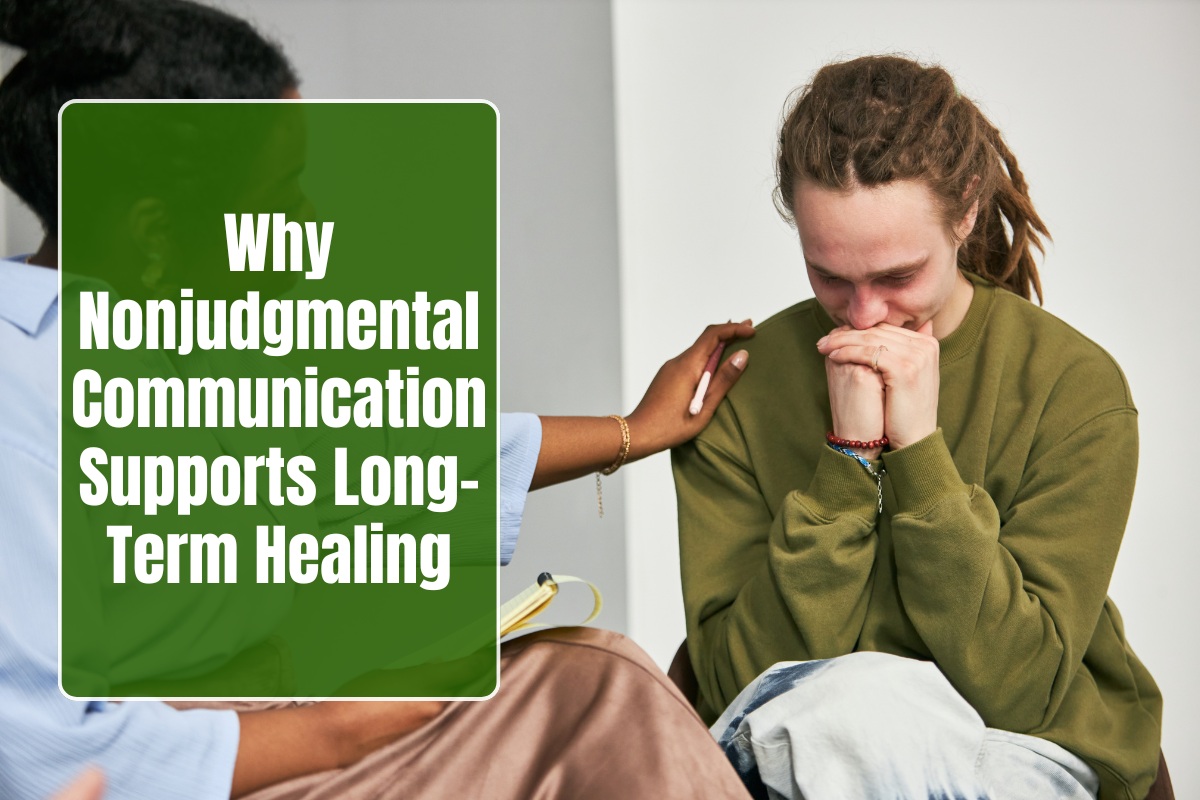
Healing from emotional pain, trauma, or long-standing conflict is rarely a linear process. It requires safety, patience, and consistent support over time. One of the most powerful yet often underestimated tools in long-term healing is nonjudgmental communication. The way people listen, respond, and speak—especially during moments of vulnerability—can either reinforce shame and defensiveness or foster trust, growth, and emotional repair.
Understanding Nonjudgmental Communication
Nonjudgmental communication is the practice of engaging with others without assigning blame, criticism, or moral evaluation to their thoughts, feelings, or experiences. It does not mean agreeing with everything someone says or avoiding boundaries. Rather, it focuses on understanding before evaluating and responding with curiosity rather than assumption.
This form of communication creates an environment where individuals feel seen and heard without fear of being labeled, dismissed, or corrected for their emotional experience.
Creating Emotional Safety for Healing
Long-term healing depends on emotional safety. When people expect judgment, their nervous system often shifts into self-protection. They may withhold information, minimize their feelings, or shut down entirely. Judgment—whether subtle or overt—signals danger, even when intentions are good.
Nonjudgmental communication sends the opposite message: “You are safe to be honest here.” This sense of safety allows individuals to explore painful emotions, memories, or beliefs without fear of rejection. Over time, repeated experiences of emotional safety help rebuild trust—in others and in oneself.
Reducing Shame and Self-Blame
Shame is one of the greatest barriers to healing. Many people already judge themselves harshly for their struggles, mistakes, or emotional responses. When communication reinforces that judgment, it deepens internalized shame and slows recovery.
Nonjudgmental responses help interrupt this cycle. When someone’s pain is met with understanding rather than criticism, it challenges the belief that they are “wrong” or “broken.” This external compassion often becomes internal compassion, which is essential for long-term emotional healing.
Encouraging Honest Expression and Self-Awareness
Healing requires honesty—not just with others, but internally. Judgmental environments encourage people to filter their truth to avoid negative reactions. Over time, this leads to disconnection from one’s own emotions and needs.
Nonjudgmental communication invites openness. When people know they will not be shamed or dismissed, they are more likely to express difficult emotions such as anger, fear, grief, or confusion. This honest expression increases self-awareness and helps individuals better understand patterns, triggers, and unmet needs.
Supporting Nervous System Regulation
From a physiological perspective, nonjudgmental communication supports nervous system regulation. Judgment, criticism, or invalidation can activate stress responses such as fight, flight, or freeze. In these states, learning and healing are limited.
Calm, accepting communication helps the nervous system settle. When individuals feel regulated, they can reflect, process emotions, and integrate new perspectives more effectively. Over time, this contributes to greater emotional resilience and stability.
Strengthening Relationships Over Time
Long-term healing rarely happens in isolation. Relationships play a critical role, whether with therapists, partners, family members, or friends. Nonjudgmental communication strengthens these relationships by building trust and reducing power struggles.
When people feel respected rather than corrected, collaboration becomes possible. Conflicts are more likely to be addressed constructively, and misunderstandings can be repaired rather than avoided. This relational stability provides a strong foundation for ongoing healing.
Promoting Growth Without Pressure
Growth cannot be forced. Judgment often carries an implicit message that someone should be “further along” or “doing better by now.” This pressure can backfire, leading to resistance or discouragement.
Nonjudgmental communication supports growth by allowing change to unfold at a sustainable pace. It recognizes that setbacks are part of healing and that progress looks different for everyone. This approach honors autonomy and reinforces intrinsic motivation rather than compliance.
Long-Term Impact on Identity and Self-Trust
Over time, consistent nonjudgmental communication reshapes how individuals see themselves. Being met with understanding helps people internalize the belief that their experiences make sense and that their emotions are valid signals rather than flaws.
This shift strengthens self-trust, a key component of long-term healing. When individuals trust themselves, they are better equipped to make healthy decisions, set boundaries, and navigate future challenges with confidence.
FAQs
What is nonjudgmental communication?
It is a way of communicating that prioritizes understanding and empathy without criticizing, blaming, or evaluating someone’s emotional experience.
Why does judgment interfere with healing?
Judgment increases shame and defensiveness, which can shut down openness and emotional processing needed for healing.
Does nonjudgmental communication mean avoiding honesty?
No. It allows for honesty and boundaries while delivering them with respect, curiosity, and compassion.
How does nonjudgmental communication affect relationships?
It builds trust, reduces conflict, and creates emotional safety, all of which support long-term relational and personal healing.
Can nonjudgmental communication be learned?
Yes. With awareness, practice, and reflection, individuals can develop more compassionate and supportive communication patterns over time.