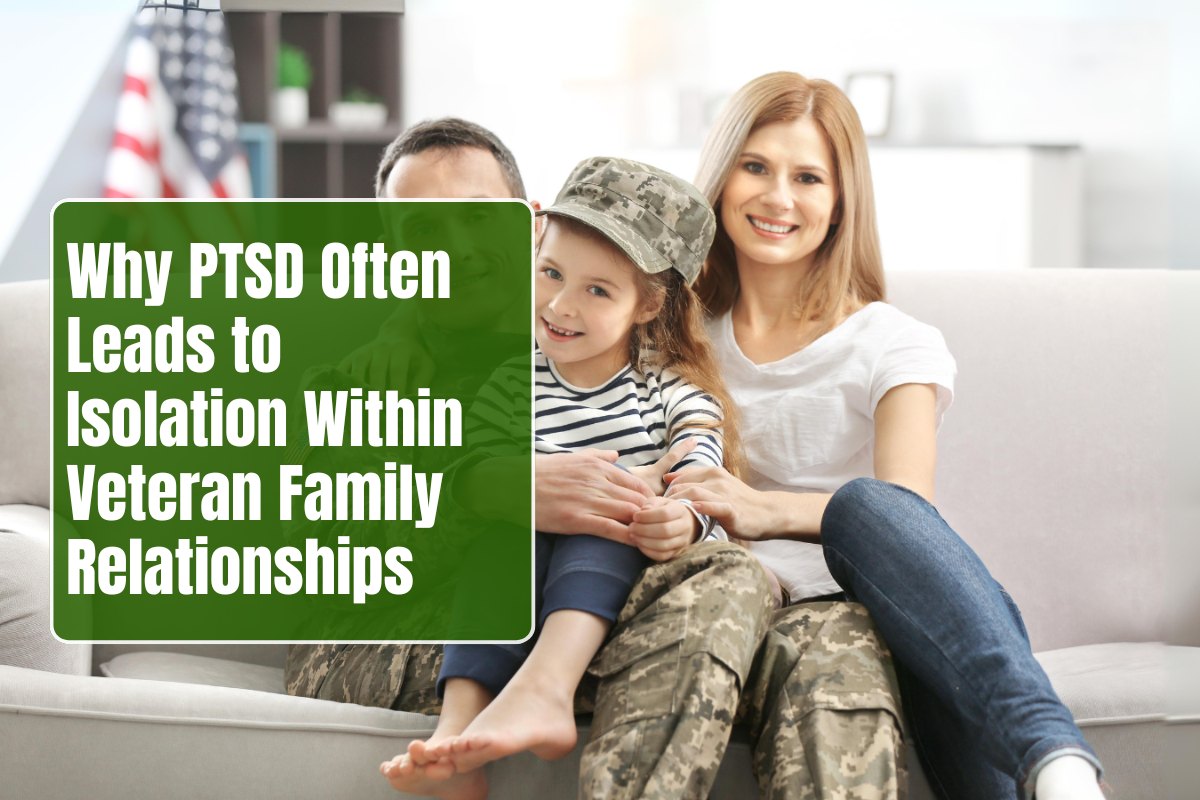
Post-Traumatic Stress Disorder (PTSD) affects far more than the individual who experienced trauma—it often reshapes family dynamics in profound and painful ways. For many veterans, PTSD can lead to emotional withdrawal, communication breakdowns, and growing distance from loved ones. This isolation is rarely intentional. Instead, it is a complex response rooted in neurological changes, emotional overload, and deeply ingrained coping mechanisms developed during and after military service.
Understanding why PTSD leads to isolation within veteran family relationships is essential for fostering empathy, reducing blame, and creating pathways toward reconnection and healing.
PTSD Changes How the Brain Responds to Stress and Connection
PTSD alters how the brain processes threat, safety, and emotion. Veterans with PTSD often remain in a heightened state of alertness, where the nervous system is constantly scanning for danger—even in safe environments like home.
Family interactions, while loving, can feel overwhelming when the brain is already overstimulated. Conversations, emotional demands, or everyday conflicts may trigger stress responses that feel unmanageable. Isolation becomes a way to reduce sensory and emotional overload rather than a rejection of family bonds.
Emotional Numbing Creates Distance Without Intention
One of the core symptoms of PTSD is emotional numbing. Veterans may feel disconnected from both positive and negative emotions as a protective response to trauma.
This numbness can make it difficult to express affection, joy, or vulnerability with family members. Loved ones may interpret this as indifference or detachment, while the veteran may feel frustrated or ashamed about not being able to “feel normally.” Over time, this emotional gap can widen into physical and relational isolation.
Avoidance as a Survival-Based Coping Strategy
Avoidance is a hallmark of PTSD. Veterans may avoid people, conversations, places, or situations that remind them—consciously or unconsciously—of traumatic experiences.
Family life often involves emotional closeness, conflict resolution, and shared memories, all of which can activate trauma responses. To prevent triggering symptoms such as panic, anger, or flashbacks, veterans may withdraw, spend excessive time alone, or disengage from family activities.
This avoidance is not about a lack of love; it is about maintaining psychological survival.
Fear of Burdening Loved Ones
Many veterans isolate themselves to protect their families. They may believe that sharing their struggles will cause worry, fear, or emotional harm to loved ones.
This belief is often reinforced by military culture, which emphasizes strength, self-reliance, and emotional control. Veterans may feel that admitting distress or vulnerability makes them a burden. As a result, they keep their internal battles private, even when that secrecy deepens relational distance.
Difficulty Trusting and Feeling Safe Emotionally
Trauma can fundamentally disrupt a person’s ability to trust—both others and themselves. Veterans with PTSD may struggle to feel emotionally safe, even with people they love deeply.
Intimacy requires vulnerability, but vulnerability can feel dangerous to a trauma-affected nervous system. Family members may unintentionally trigger fear responses through tone, questions, or emotional closeness. Isolation becomes a way to maintain a sense of control and safety.
Anger and Irritability Push Others Away
PTSD often involves heightened irritability and anger, sometimes appearing without clear cause. Veterans may lash out verbally, become defensive, or react intensely to minor stressors.
After repeated conflicts, veterans may withdraw to avoid hurting their family or experiencing guilt and shame. Family members, in turn, may step back to protect themselves emotionally. This mutual distancing can solidify isolation on both sides.
Loss of Identity and Role Confusion
Military service provides a clear sense of identity, structure, and purpose. After returning home, veterans with PTSD may struggle to redefine their role within the family.
Feeling disconnected from civilian life or unsure of where they belong can lead veterans to retreat inward. Isolation becomes a response to identity confusion and a perceived loss of usefulness or belonging within the family system.
Communication Barriers and Emotional Shutdown
PTSD can impair communication by making it difficult to articulate thoughts and emotions. Veterans may not have the language to explain what they are experiencing, or they may shut down entirely during emotional conversations.
When communication feels impossible or leads to conflict, withdrawal can feel like the safest option. Unfortunately, this silence often increases misunderstanding and emotional distance within families.
Shame and Self-Blame Reinforce Withdrawal
Many veterans carry deep shame related to their trauma, symptoms, or perceived changes in who they are. They may believe they are “broken,” dangerous, or undeserving of closeness.
Shame thrives in isolation. Rather than seeking connection, veterans may pull away to avoid exposure, judgment, or rejection—even when those fears are not grounded in reality.
The Cycle of Isolation in Family Systems
Isolation rarely affects only one person. As veterans withdraw, family members may feel confused, rejected, or helpless. They may respond with frustration, overcompensation, or emotional withdrawal of their own.
Without understanding the role PTSD plays, this cycle can reinforce itself—deepening isolation on all sides and making reconnection feel increasingly difficult.
Frequently Asked Questions (FAQ)
Q. Is isolation a choice for veterans with PTSD
Usually not. Isolation is often a coping response to overwhelming symptoms rather than a conscious decision to disconnect.
Q. Does isolation mean the veteran doesn’t care about their family
No. Many veterans isolate because they care deeply and want to protect their loved ones or themselves from emotional pain.
Q. Can family support reduce PTSD-related isolation
Yes. When families understand PTSD and respond with patience and boundaries, it can reduce fear and encourage connection.
Q. Why don’t veterans just talk about what they’re feeling
Trauma, emotional numbing, shame, and communication difficulties can make talking feel unsafe or impossible.