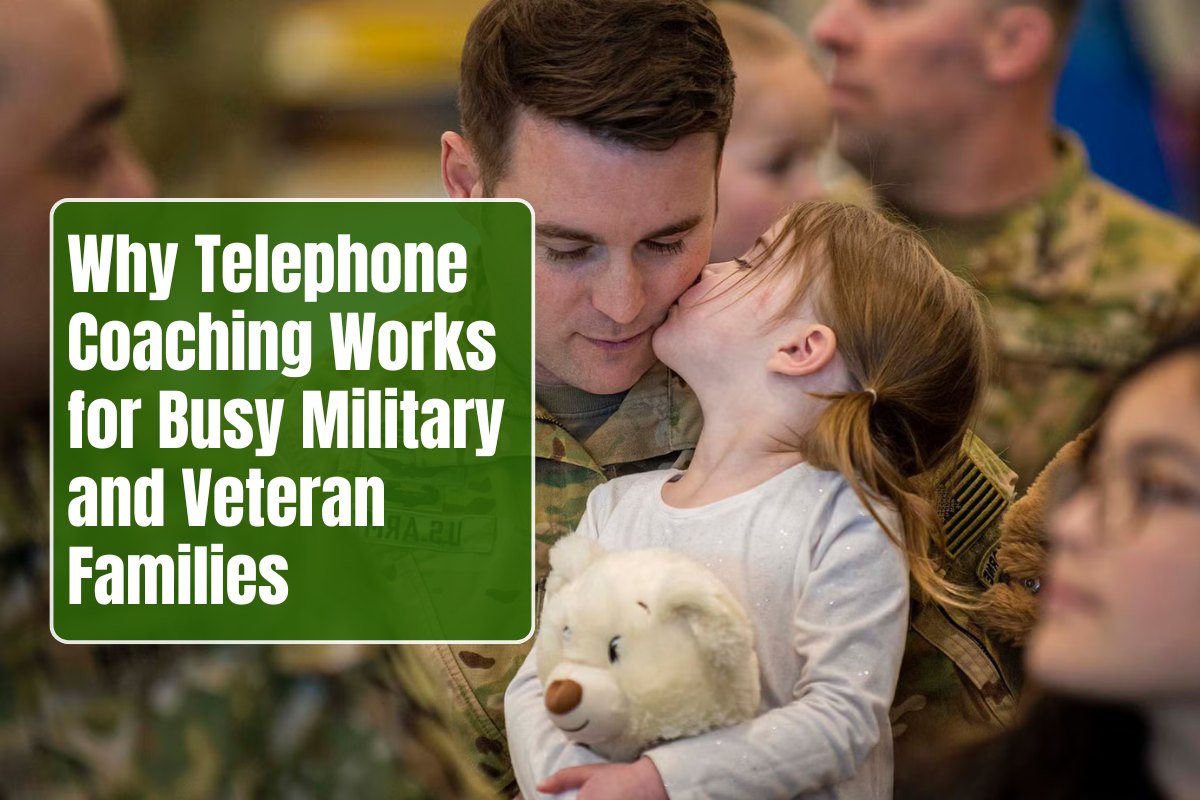
Telephone coaching delivers flexible, accessible support to military and veteran families juggling deployments, relocations, and demanding schedules. Programs like VA’s Coaching Into Care and peer-led motivational coaching overcome barriers such as travel distance and time constraints, yielding improvements in mental health symptoms and self-care adoption without requiring in-person visits. This approach suits busy lifestyles by fitting into daily routines, from commutes to evenings at home.
Accessibility for Rural and Mobile Families
Rural veterans, comprising a significant portion of VA users, face long drives to clinics, with over 57% receiving primary care but low mental health engagement around 20%.
Telephone coaching eliminates travel, as demonstrated in the COACH trial where rural veterans in Northern California and Louisiana received four 20-30 minute peer sessions via phone, achieving significant reductions in depression, PTSD, and cannabis use scores compared to controls.
For military families frequently relocating, phone access remains constant regardless of base or post-service address, providing continuity during transitions.
Flexibility Around Packed Schedules
Service members and veterans often work irregular shifts, manage childcare, or balance multiple jobs, leaving little room for appointments. Brief phone calls—scheduled at participant convenience—integrate seamlessly, with COACH participants valuing the “no travel needed” aspect during workdays or family duties.
Family members using Coaching Into Care call a hotline for immediate guidance on encouraging reluctant veterans, receiving tailored scripts and VA referrals in one session, ideal for caregivers handling daily crises. This on-demand format boosts retention, as peers shift focus to treatment adherence post-initiation without rescheduling hassles.
Builds Trust Without Visual Barriers
Phone coaching fosters rapport through voice alone, reducing intimidation from clinical settings or visual judgments. Veteran peers “speak the same language,” sharing service experiences to create instant bonds, as in Stanford’s program where 75% of 200 at-risk veterans found calls helpful for readjustment.
In COACH, motivational interviewing (MI) techniques like open questions and reflections built strong partnerships, with “fair” fidelity and high veteran satisfaction reported qualitatively. Families appreciate anonymity, discussing stigma or resistance privately without face-to-face vulnerability.
Cost-Effective and Scalable Support
No transportation or facility costs make telephone coaching economical for families on fixed incomes or during financial strains common in transitions. VA programs scale nationally via hotlines like Coaching Into Care, supporting thousands of family callers annually with trained responders offering symptom recognition tips and resource navigation.
Pragmatic trials confirm secondary benefits: coached veterans adopted self-care like apps and yoga at higher rates (61% vs. 47%), enhancing quality of life in psychological and social domains without added expense.
Evidence of Symptom Relief and Engagement
While COACH’s primary outcome showed no difference in treatment initiation (45% vs. 46%), secondary gains were robust: coached groups improved PTSD scores, depression, and overall well-being, suggesting phone coaching meets needs directly or fulfills them via self-management.
Family coaching evaluations indicate high feasibility, with callers gaining confidence to prompt veteran care-seeking. Blended phone approaches, pairing calls with digital tools, further reduce anxiety, aligning with busy users preferring quick, text-enhanced check-ins.
Practical Strategies for Implementation
Coaches tailor sessions to family dynamics, using MI to explore readiness (“On a scale of 0-10, how ready is your veteran for help?”). For busy parents, evening slots and follow-ups via voicemail ensure follow-through.
Programs emphasize self-care referrals—breathing exercises, community classes—fitting into 10-minute gaps. Peers monitor progress remotely via VA data, shifting to retention coaching (“How is treatment enhancing your family life?”). Training ensures crisis handling, with supervisors reviewing recordings for quality.
Telephone coaching empowers busy military and veteran families by prioritizing convenience and results, proving effective for symptom management and bridging to care amid chaotic lives. Its success lies in respecting time scarcity while delivering veteran-centric, empathetic guidance.
FAQ
Q1. Why is telephone coaching ideal for military families on the move?
It provides consistent access without location dependencies, suiting frequent PCS moves or deployments, as families can call from anywhere.
Q2. Does phone coaching improve mental health outcomes?
Yes, trials show reductions in depression, PTSD, and substance use, plus better quality of life, even if formal treatment initiation matches controls.
Q3. How does it help family members encourage veterans?
Coaching Into Care offers scripts, resource lists, and stigma-addressing tips via hotline, boosting caller confidence in one call.
Q4. Is telephone coaching as effective as in-person?
Often yes—phone MI by peers yields comparable or better engagement for rural users due to convenience and reduced resistance.
Q5. What if a family can’t commit to long sessions?
Sessions last 20-30 minutes, scheduled flexibly, with self-care tools for ongoing support between calls.