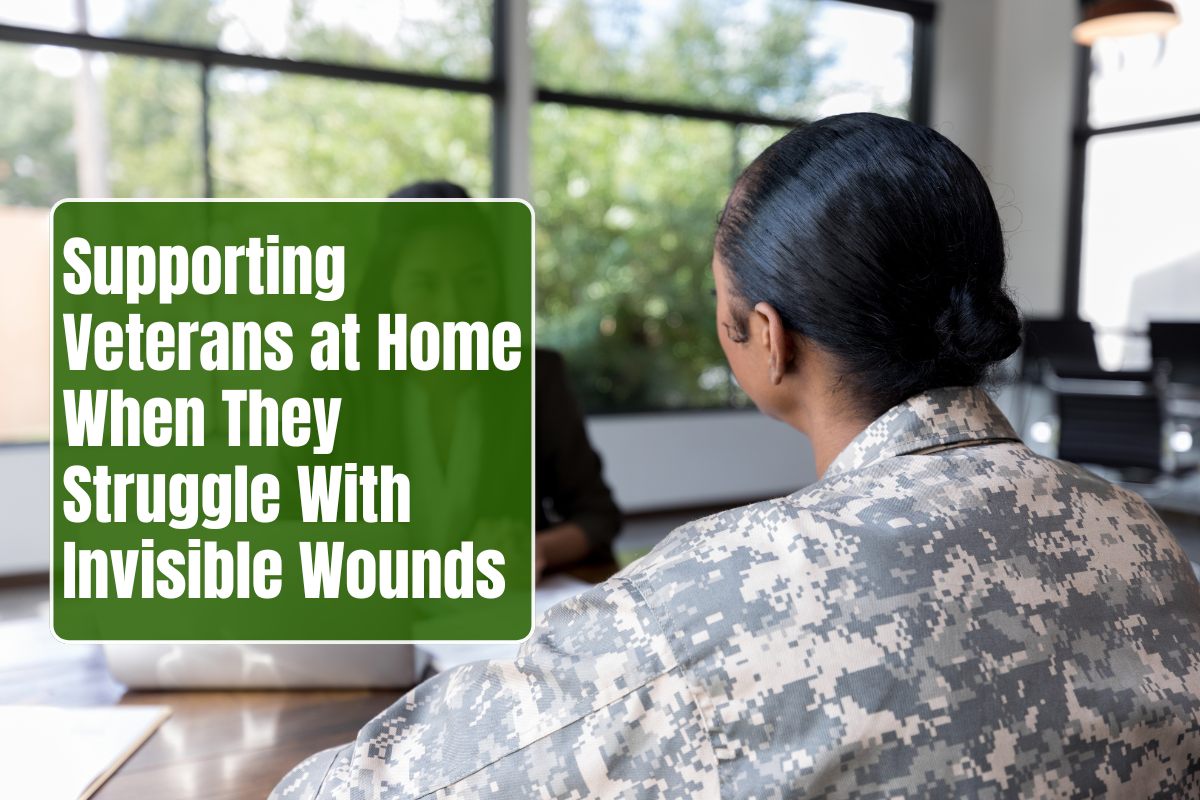
Supporting veterans at home with invisible wounds like PTSD involves creating safety, fostering empathy, and building routines that promote healing without overwhelming anyone. Families can minimize triggers, encourage treatment collaboratively, and access VA resources to sustain long-term support while protecting their own well-being. These strategies transform homes into resilient spaces for recovery.
Create a Safe, Predictable Environment
Minimize triggers by identifying sounds, crowds, or surprises that provoke hypervigilance—arrange seating with backs protected, avoid sudden noises, and discuss family adjustments openly. Establish routines for meals, sleep, and chores to restore stability, reducing anxiety from unpredictability. Small changes like dim lighting or quiet zones help veterans feel secure without constant scanning for threats.
Partners report success co-creating “trigger maps” during calm times, using signals for space needs to prevent escalation. This proactive approach counters hyperarousal, fostering trust over tension.
Practice Empathetic Listening and Validation
Active listening—eye contact, reflecting statements like “That sounds overwhelming”—validates without fixing, countering isolation from numbing. Avoid judgment or comparisons; reassure “You’re not alone” to normalize struggles, encouraging disclosure when ready. Patience during silence or irritability prevents defensiveness, as veterans process trauma nonlinearly.
Family members note non-judgmental responses de-escalate outbursts, rebuilding emotional closeness eroded by symptoms. Phrases like “I’m here whenever” invite sharing without pressure.
Encourage Treatment as a Team Effort
Gently suggest VA therapies like PE or EMDR, offering to attend initial sessions: “I’ll go with you if it helps.” Family-Supported PE boosts adherence by 68%, with spouses as “workout buddies” for homework and encouragement. Normalize ambivalence: “It’s okay to feel doubtful—many do and still improve.”
VA Caregiver Support Program (PGCSS) provides training, peer groups, and stipends for family involvement, enhancing veteran engagement. Caregivers gain skills for joint coping, reducing secondary trauma.
Prioritize Shared Positive Activities
Plan low-stress outings like walks or games to counter avoidance and rebuild bonds, praising efforts: “I’m proud you tried that.” Mindfulness or grounding exercises together—deep breathing during stress—strengthen resilience without therapy labels. Celebrate small wins, like better sleep, to foster hope.
These activities restore intimacy lost to numbing, with families reporting stronger connections post-routine implementation.
Protect Caregiver Well-Being
Burnout risks secondary PTSD—set boundaries: “I need recharge time.” Join PGCSS for counseling, respite, and groups to process resentment or fatigue. Self-care like exercise prevents spillover conflicts, sustaining support capacity.
VA resources include PCAFC stipends for intensive caregivers, ensuring sustainability.
Leverage Community and Professional Resources
PsychArmor courses educate on PTSD symptoms; WWP connects to peers sharing stories. Family therapy rebuilds communication, with evidence showing reduced isolation. Hotlines like VA Caregiver Support (1-855-260-3274) offer immediate guidance.
FAQs
Q1: How to spot and reduce triggers at home?
Note reactions to noises/crowds; use signals, back-protected seating, and quiet zones.
Q2: What listening builds trust?
Reflect feelings, avoid advice; say “I’m here” without judgment.
Q3: Does family involvement improve treatment?
Yes, boosts PE adherence 68%; act as supportive teammates.
Q4: How to prevent caregiver burnout?
Set boundaries, join PGCSS for counseling/respite.
Q5: What routines help most?
Consistent meals/sleep/chores restore security.
Q6: Where find free education?
PsychArmor, VA caregiver programs, WWP peers.