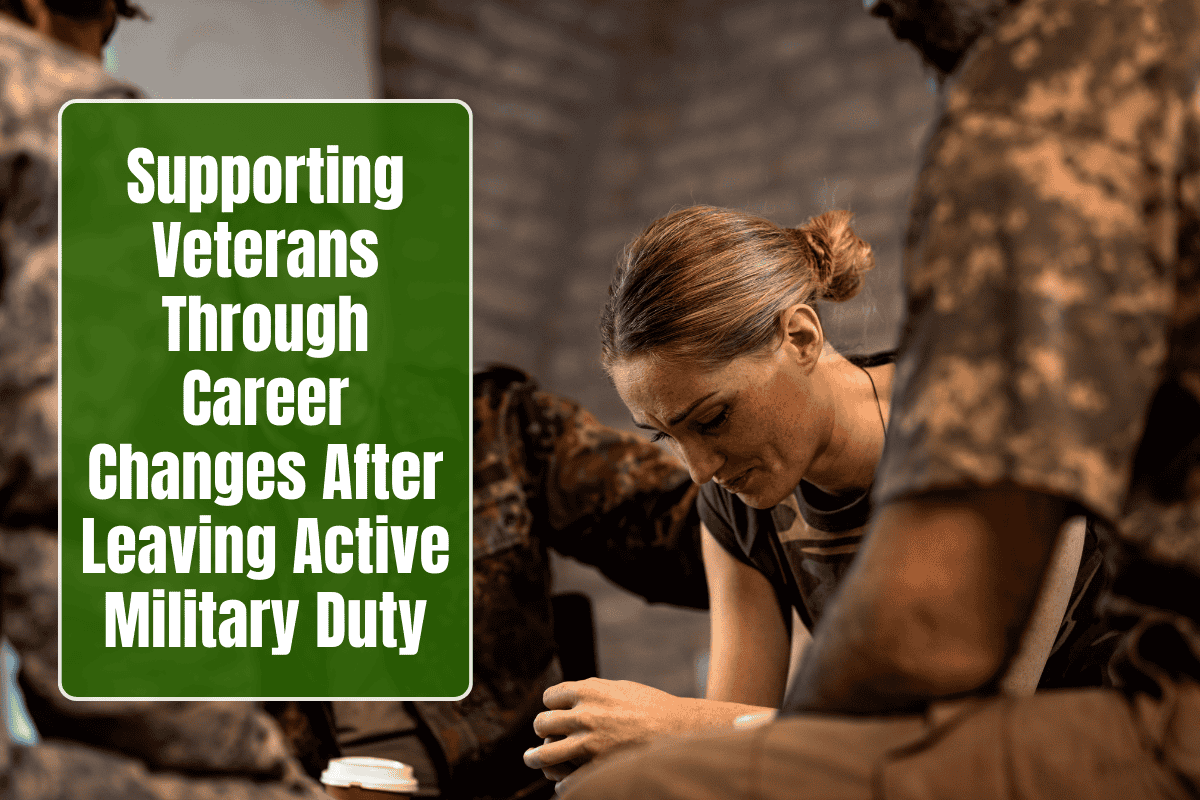
Veterans transitioning from active duty often face steep challenges in career changes, with roughly half leaving their first civilian job within a year.
These shifts demand translating military skills like leadership and logistics into civilian roles, amid high spouse unemployment rates around 22%. Targeted support through programs, networking, and financial aid empowers them to thrive, turning service-honed resilience into professional success.
Transition Statistics
About 200,000 service members exit annually, mostly young enlisted personnel; 85% attend Transition Assistance Program (TAP) workshops, but only 50% feel prepared.
While 43% quit first jobs in year one and 80% by year two, this “exploration phase” stabilizes long-term—veterans stay 8.3% longer at subsequent employers and earn promotions 39% faster. Programs like Onward to Opportunity boost earnings by $7,000-$13,000 via targeted training.
Key Support Programs
Hiring Our Heroes fellowships and SkillBridge internships connect vets to employers pre-separation, matching skills to fields like IT, healthcare, and trades. USAA’s 2025 “Honor Through Action” initiative invests $500 million in fellowships like Summit and Signal, rotating vets through finance roles with mentorship. Helmets to Hardhats places them in union construction jobs, valuing discipline for high-demand apprenticeships.
Skill Translation Strategies
Military experience maps directly: logistics officers excel in supply chain, medics in nursing, intel in cybersecurity. Resume tools like VA’s Military Skills Translator reframe MOS ratings—e.g., infantry leadership becomes “team management under pressure.” Certifications via GI Bill (up to 36 months tuition-free) target in-demand credentials like CompTIA or CDL, with 160% higher graduate degree odds for vets.
Networking and Mentorship
LinkedIn’s Veteran Opportunity Report urges bypassing online apps—direct recruiter sourcing rose 72% since 2023. Join American Corporate Partners for executive mentors or Bunker Labs for entrepreneur vets. Events like Warrior Rising pitch competitions build networks; spouse programs combat 136% unemployment spike post-relocation.
Financial and Wellness Aid
GI Bill covers education, while VA loans fund homes/businesses at 0% down. Financial trends show debt peaks 0-6 months post-exit but stabilizes by year two via steady income. Mental health via VA’s Readjustment Counseling addresses isolation; 2026 trends emphasize holistic support like family coaching.
Success Pathways Table
Vets excel long-term, with 2.9x work experience edge.
Employer Best Practices
Companies hire vets for loyalty—30% lower turnover—and offer transition stipends. Prudential notes two-thirds struggle with skill translation, so clear pipelines via VA’s 100K Jobs Mission help.
FAQs
Q. Why do half of vets leave first jobs quickly?
Skill gaps, culture shock; it’s healthy exploration leading to better fits.
Q. What’s SkillBridge?
Pre-separation internships matching military skills to civilian jobs.
Q. How does GI Bill aid transitions?
Funds 36 months education/certifications for high-demand fields.
Q. Spouse unemployment solutions?
Flexible roles via Hiring Our Heroes; combat 22% rate post-relocation.
Q. Long-term vet job outcomes?
Higher retention, promotions; $7K+ earnings via programs.